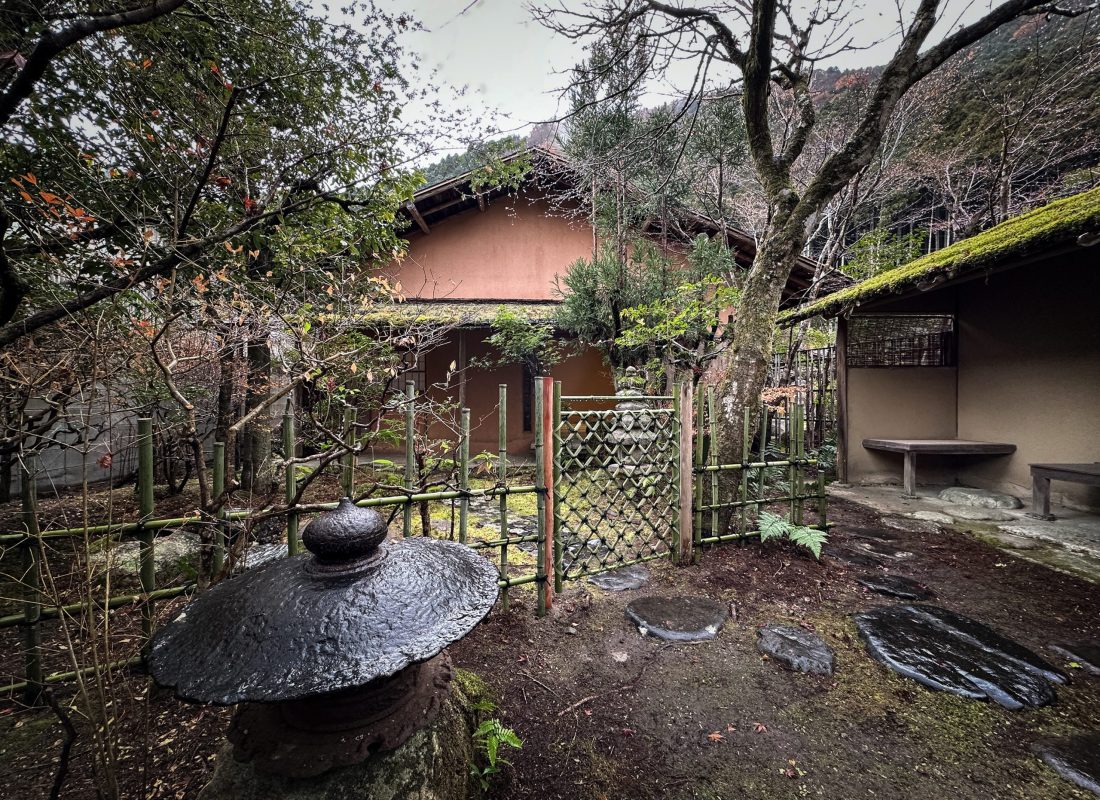
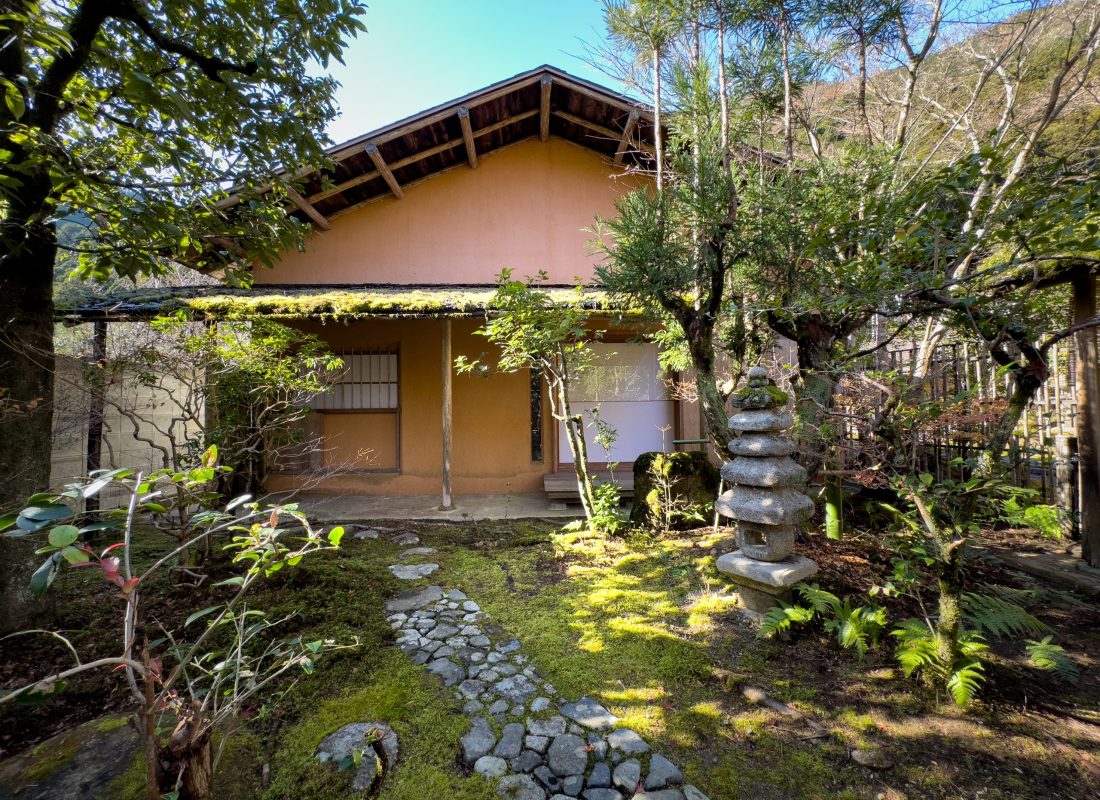
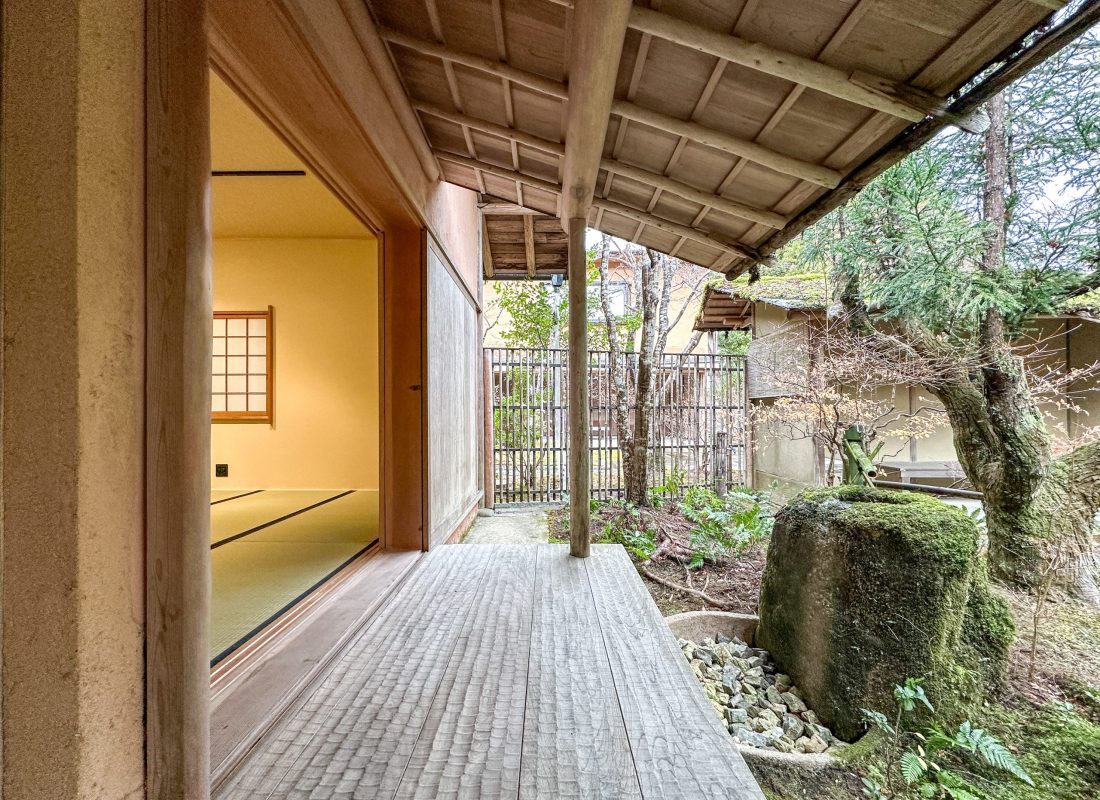
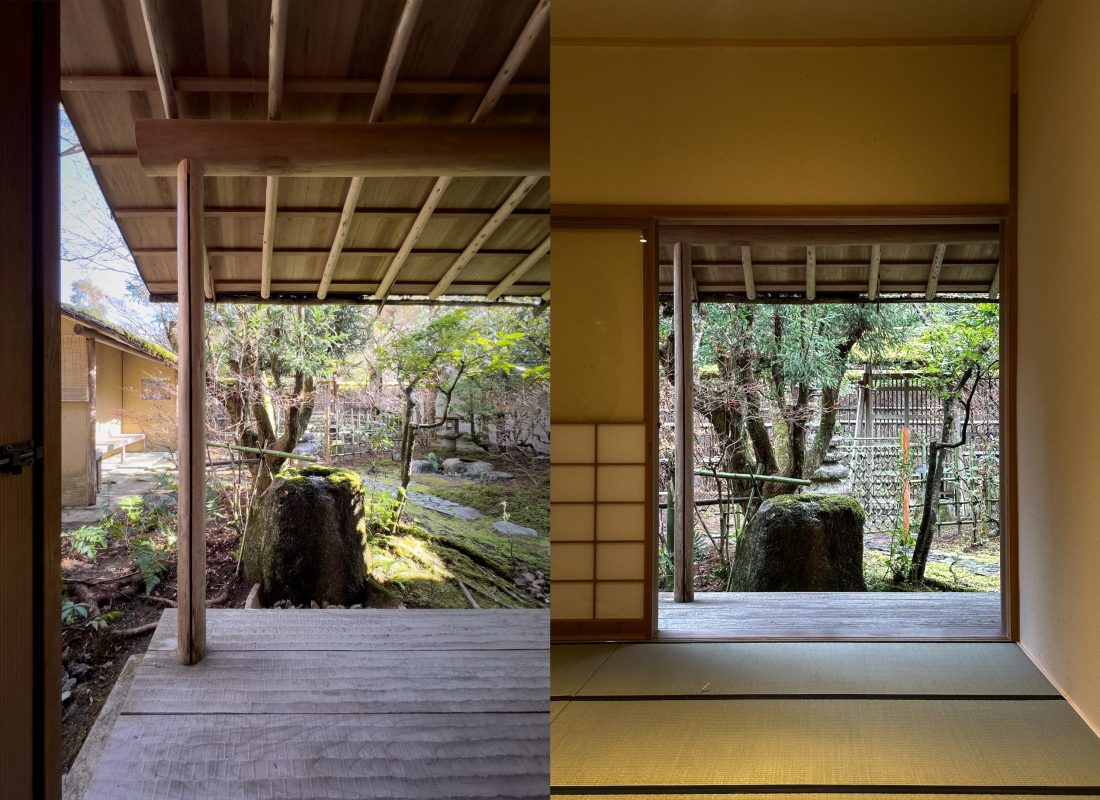
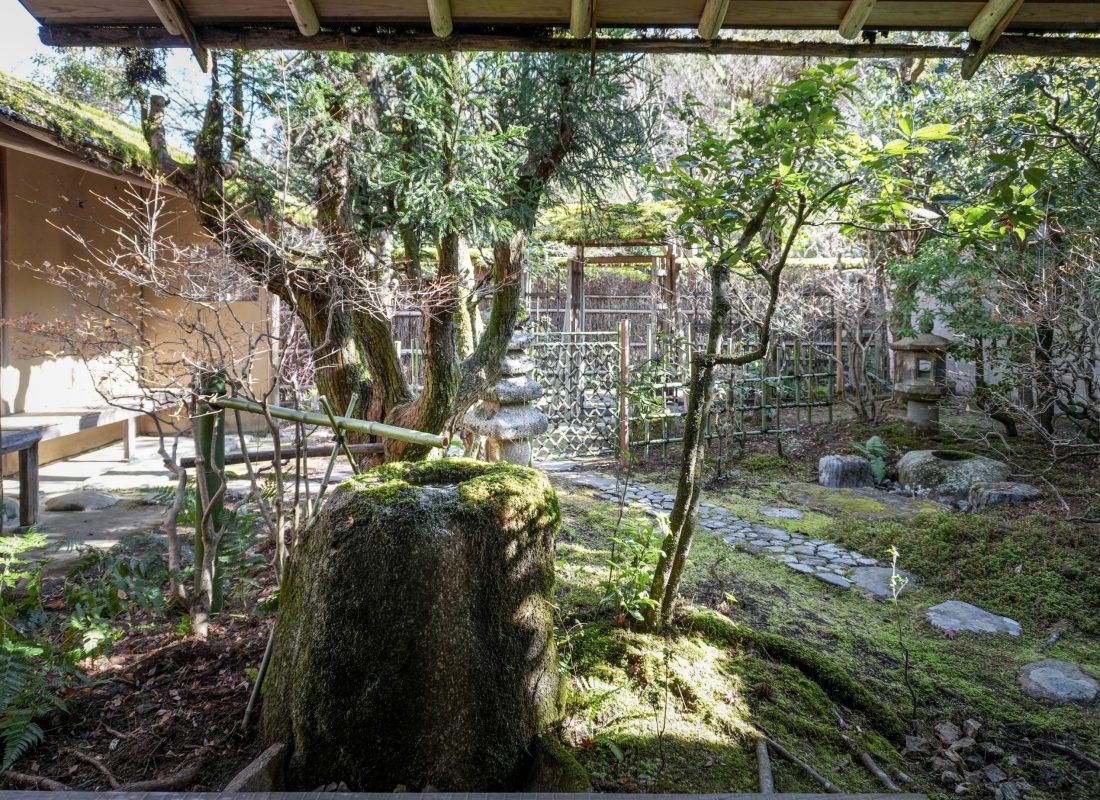
This project conserves and quietly renews a teahouse in the northern hills of Kyoto, together with its surrounding roji garden, originally conceived as a single composition of building and landscape. The aim is to let it continue being used for tea, rather than kept as a preserved object. Conservation here is understood not as fixing a building in time, but as tending to a living environment: repairing what has worn, remaking what cannot be repaired, and adding only what present-day use genuinely requires.
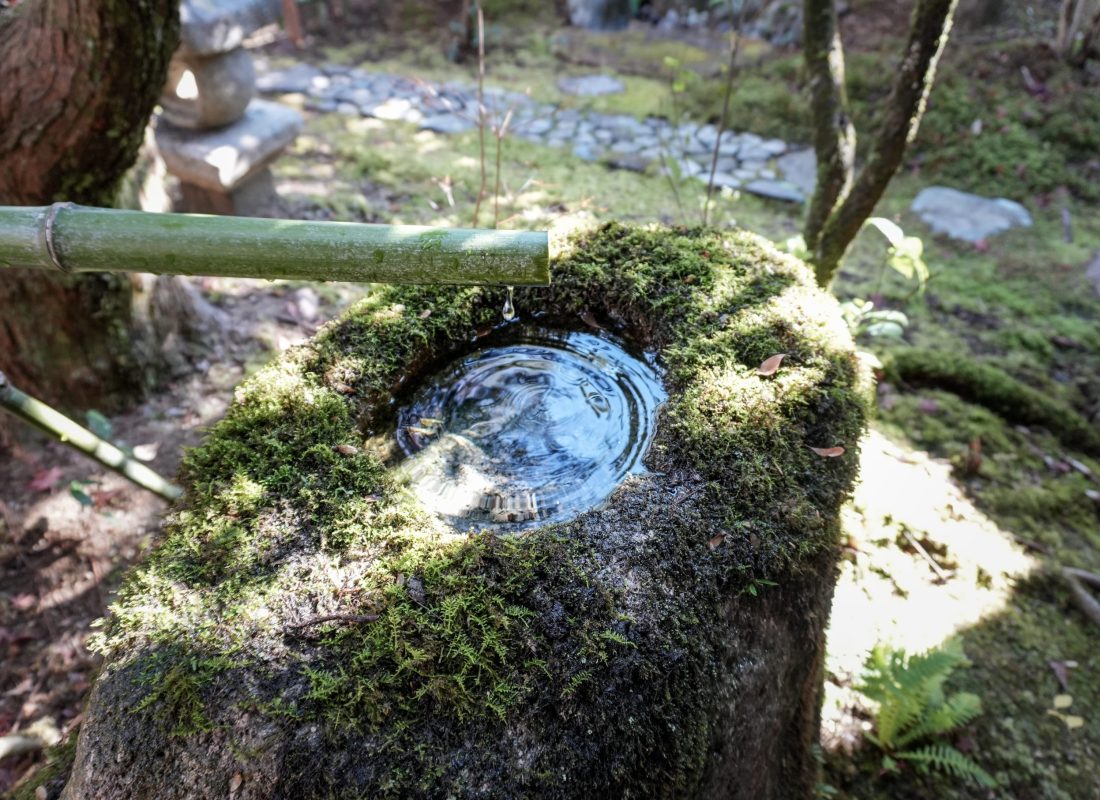
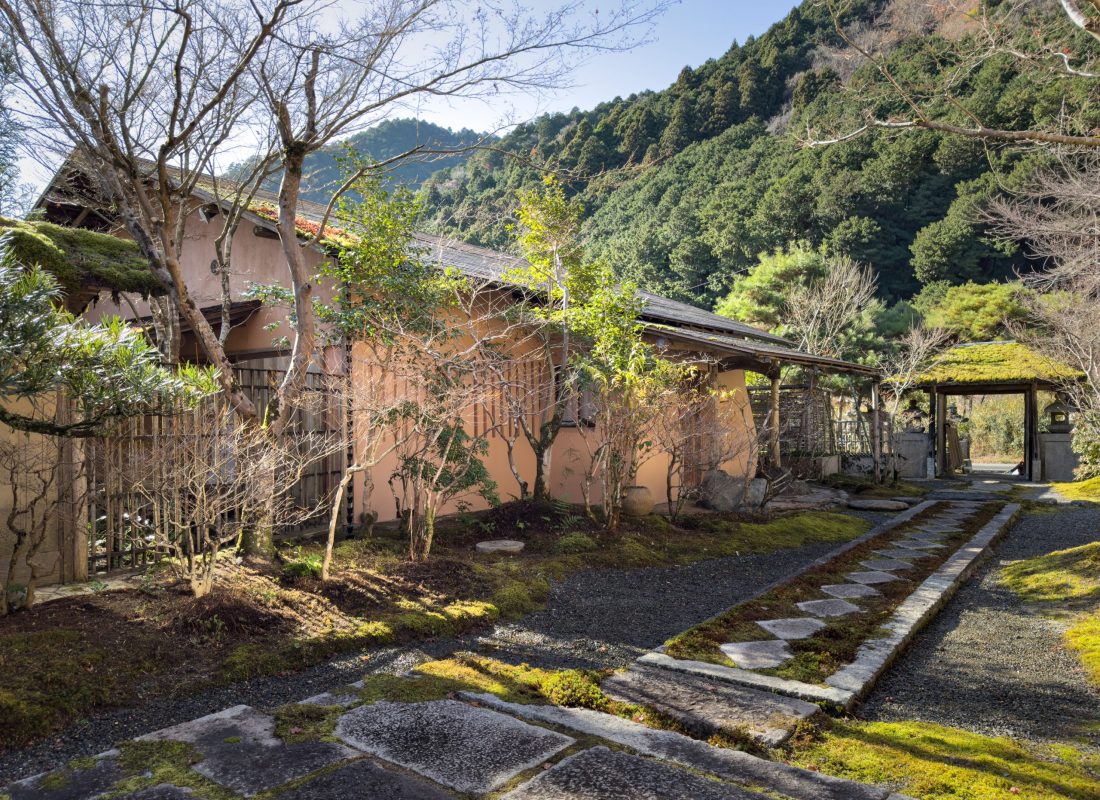
The work begins with the garden, because in tea the approach is already part of the ceremony. Moss, stepping stones, bamboo fences, and a stone lantern lead from an outer garden to an inner one, ending at the tsukubai, a low stone basin fed by a single bamboo spout, where guests crouch to rinse their hands and mouth before entering. The slow path is meant to quiet the body and set the everyday world aside.
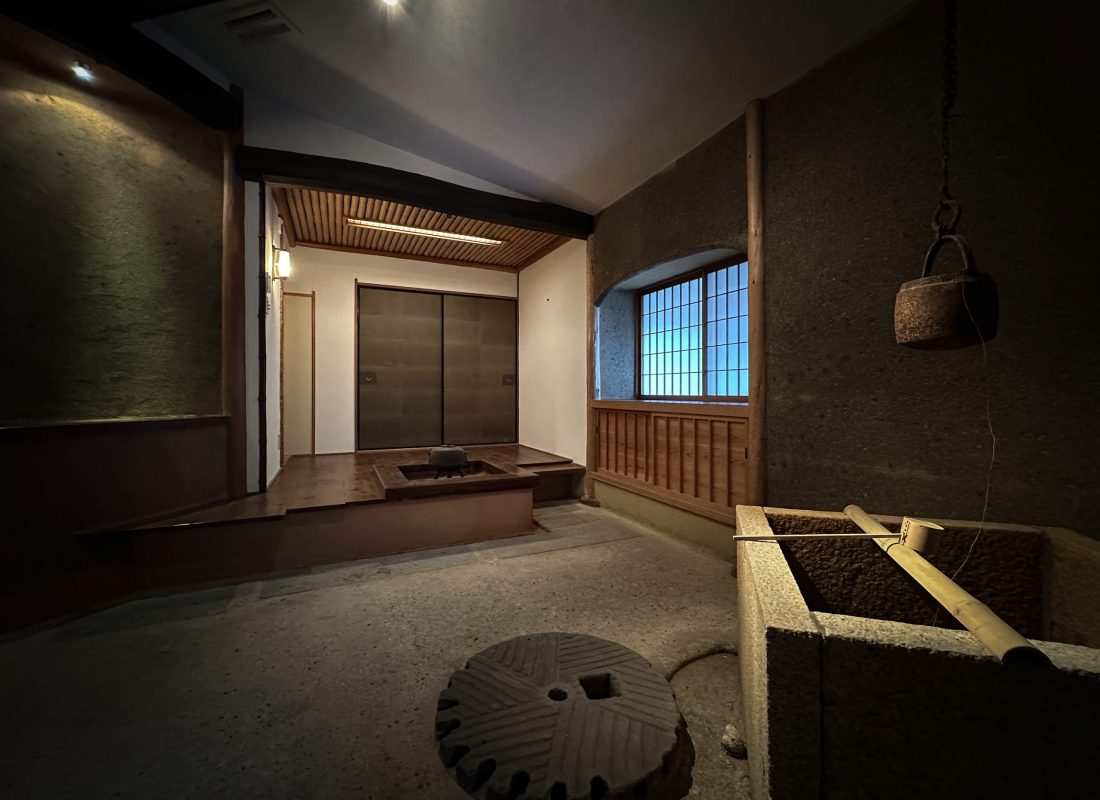
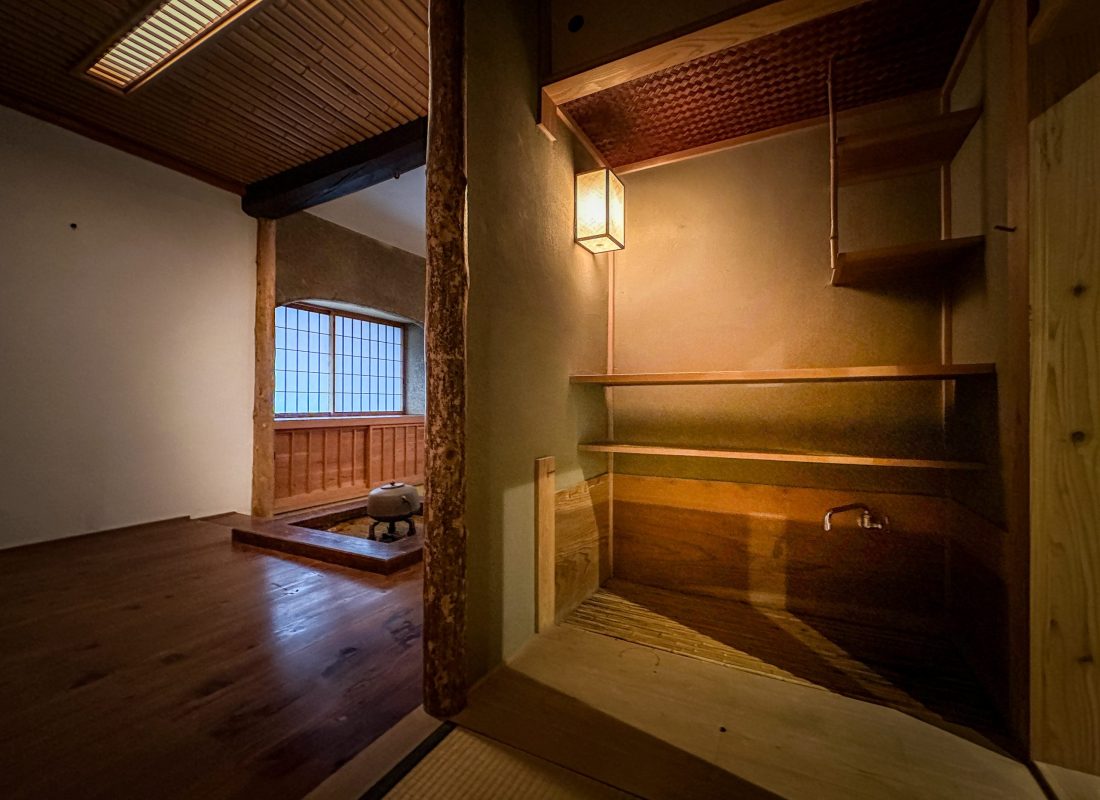
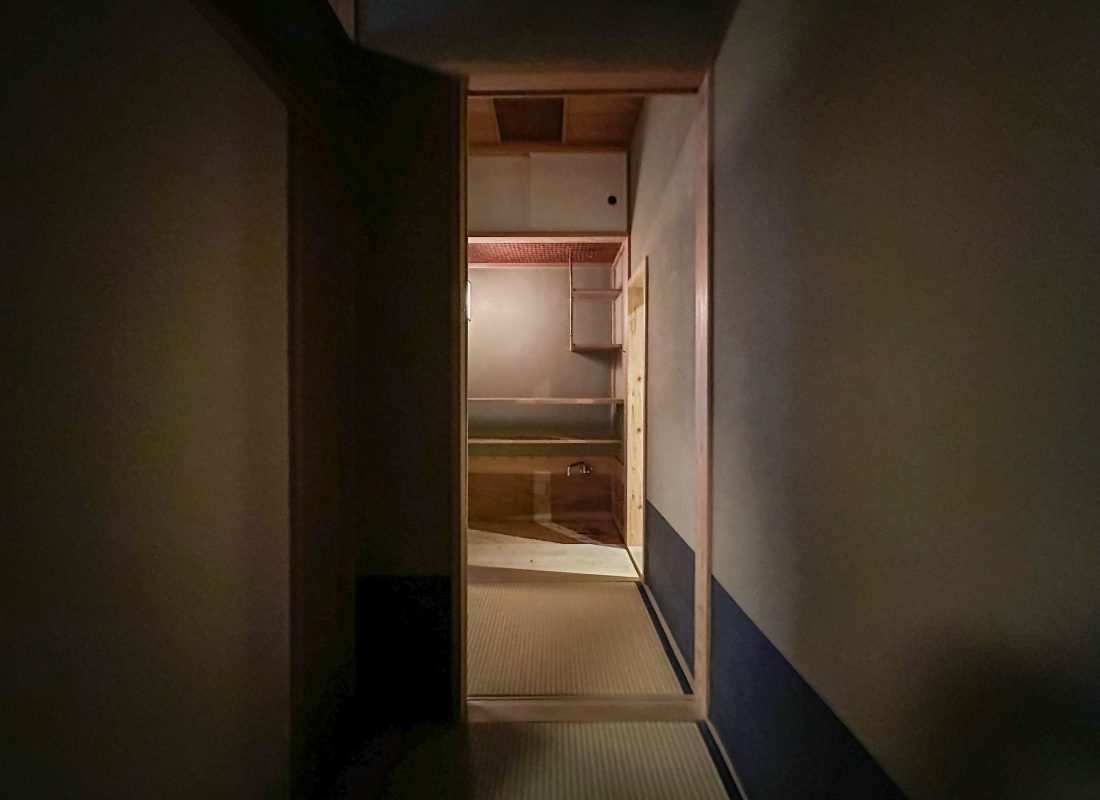
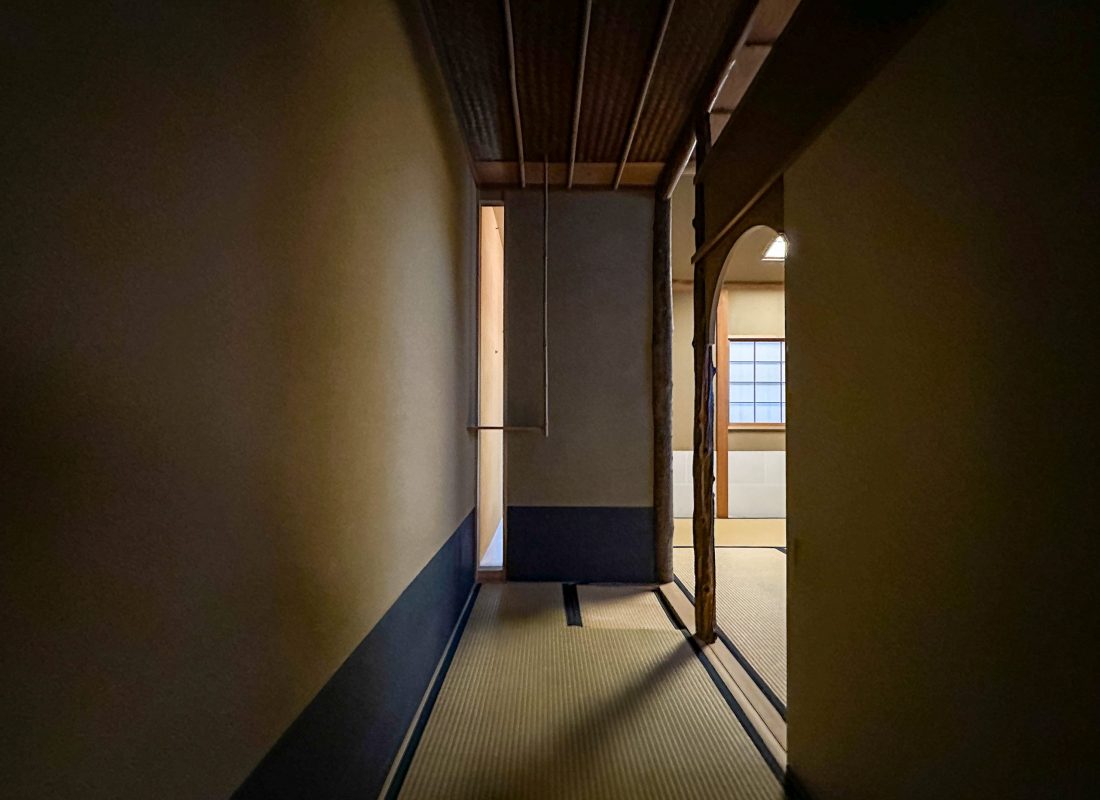
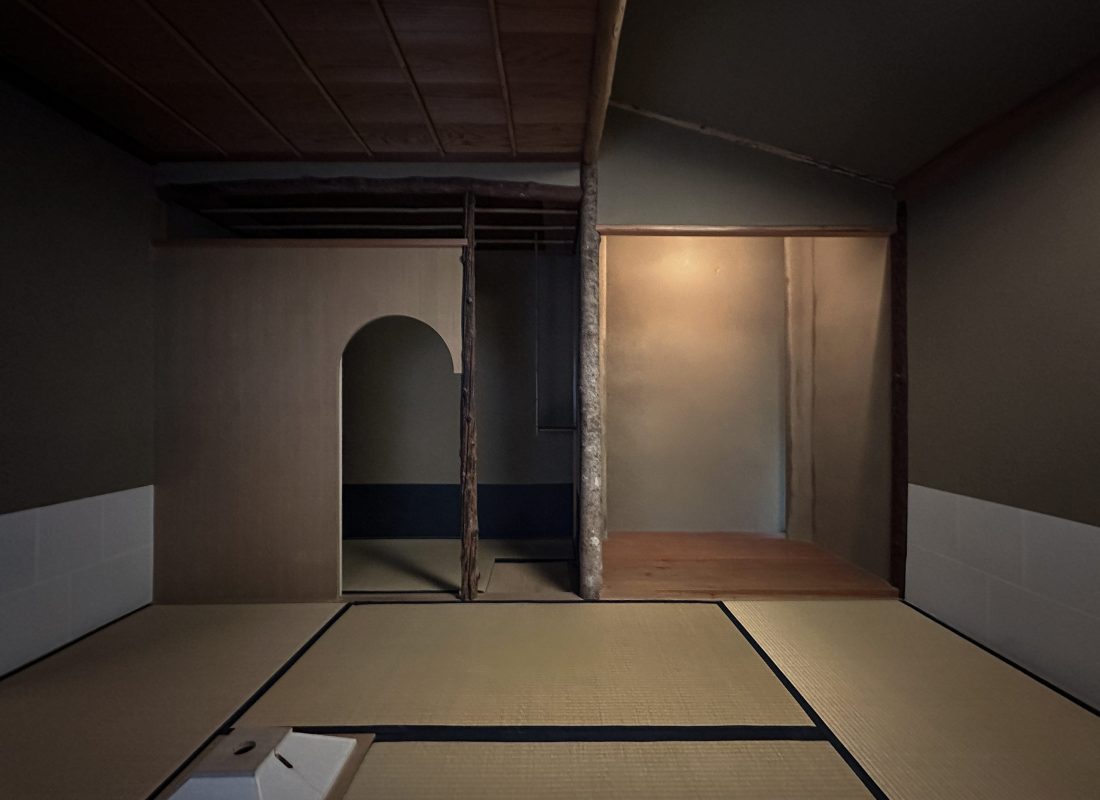
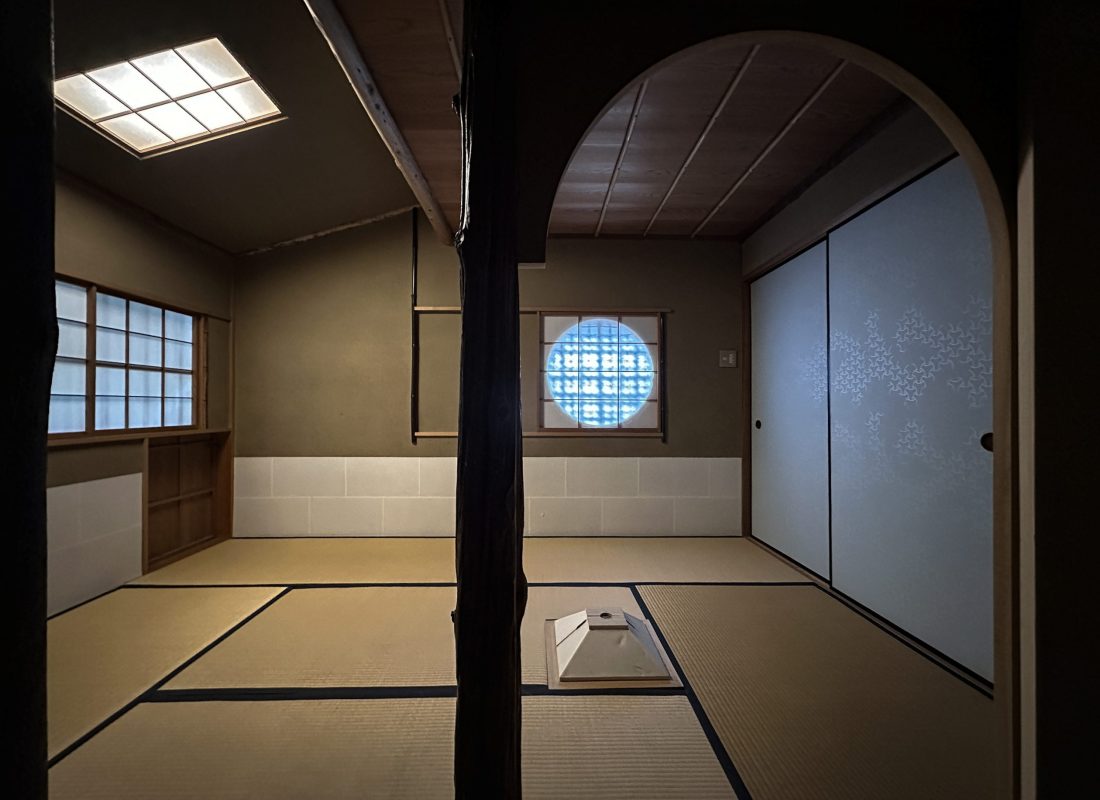
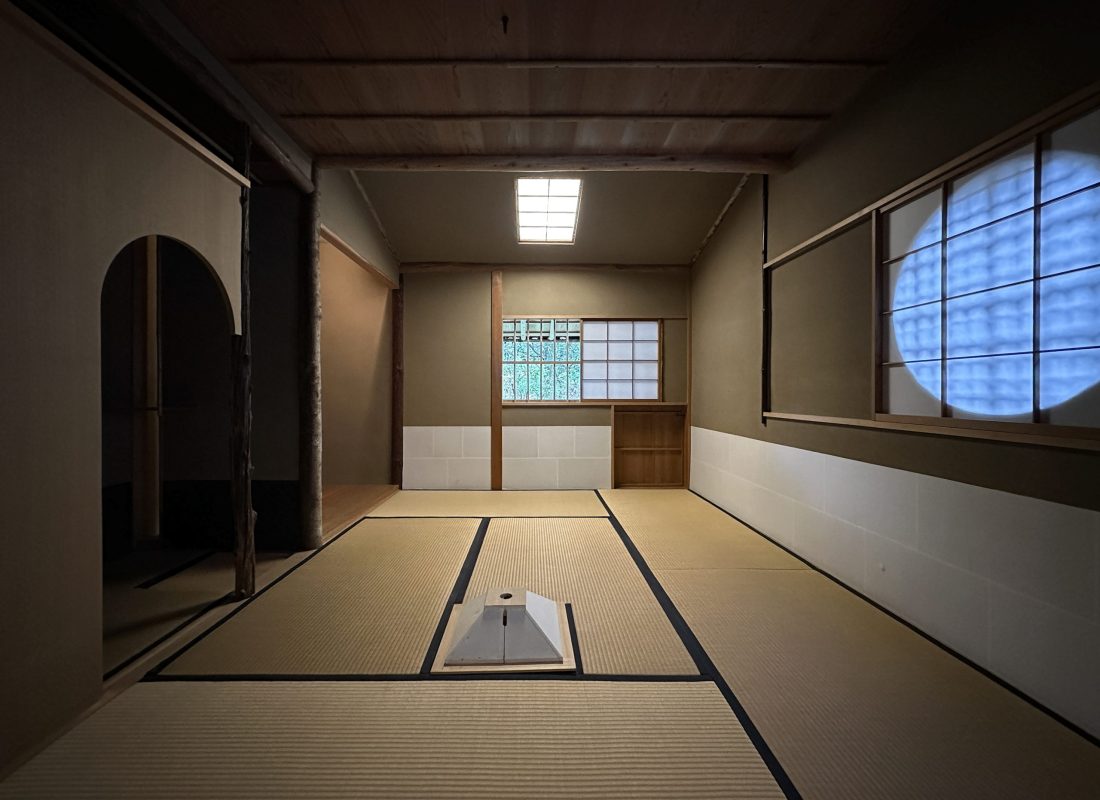
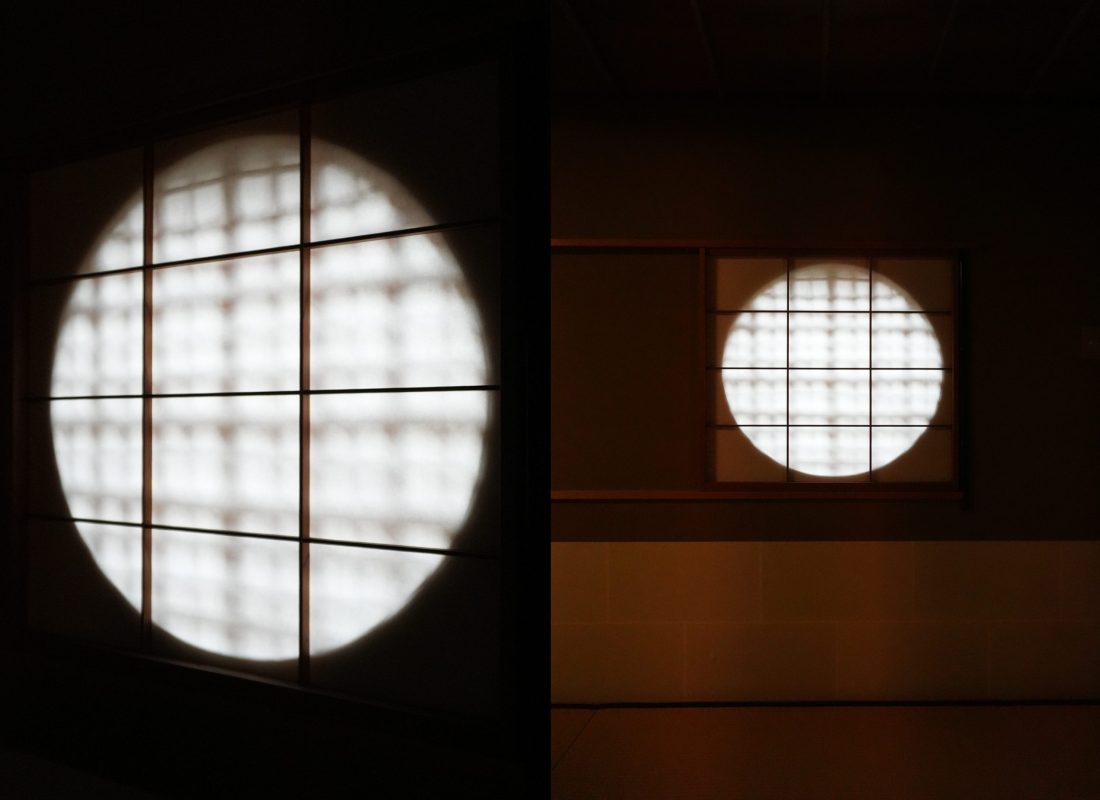
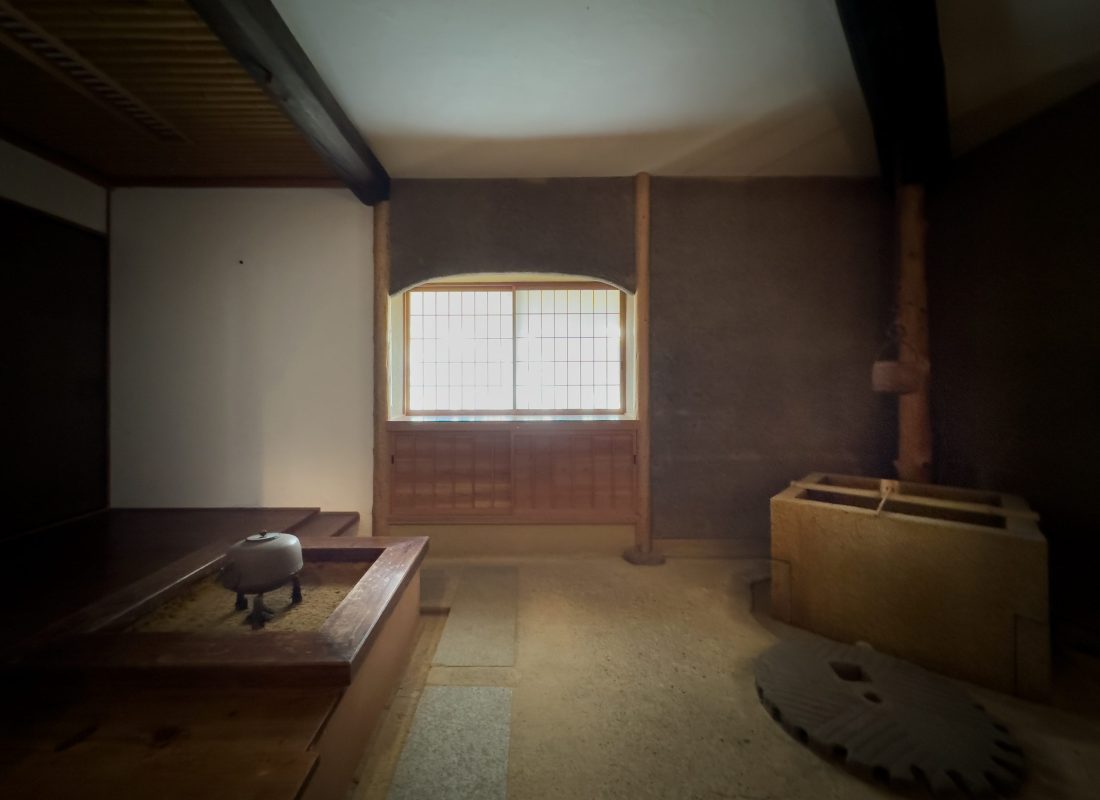
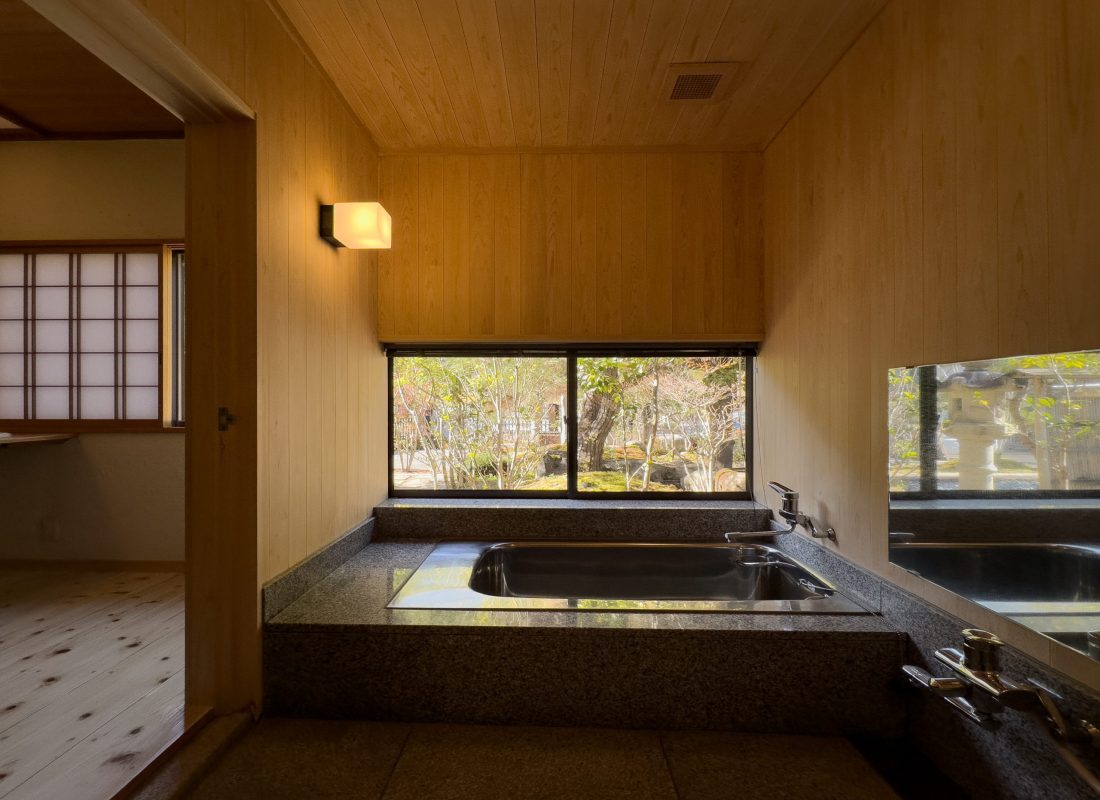
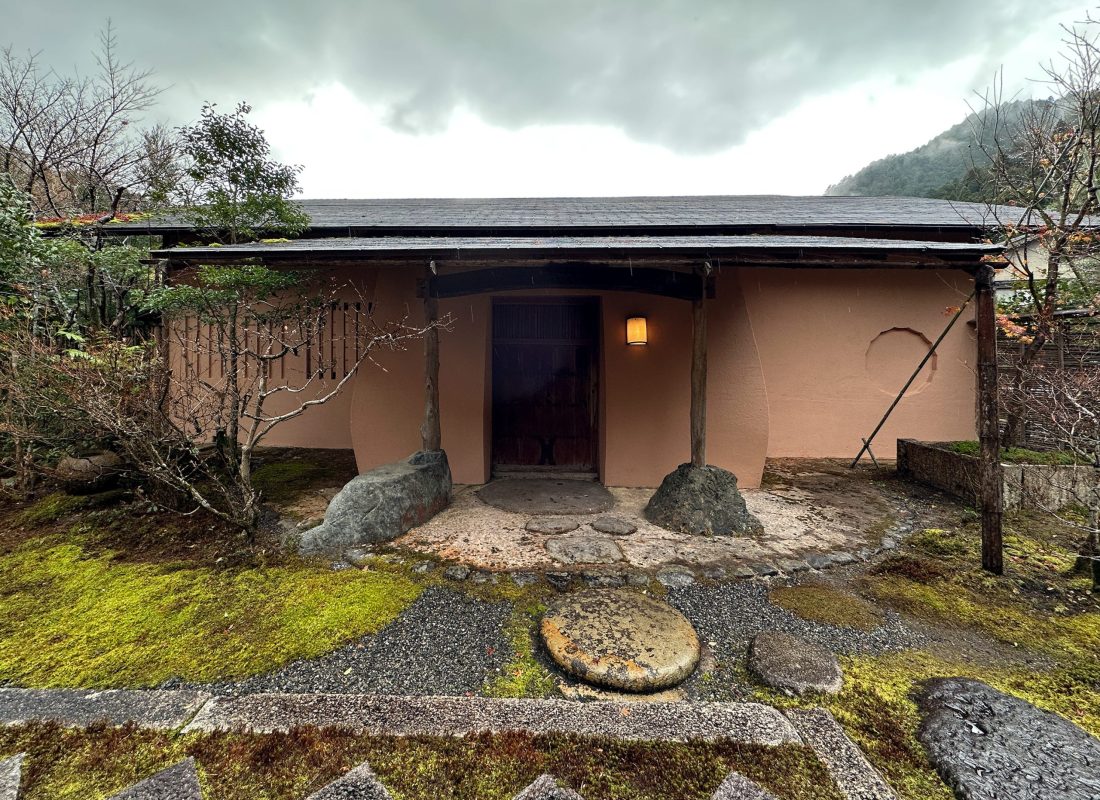
Inside, the rooms are repaired in the spirit of sukiya restraint: low and intimate, with earthen plaster walls, bark-clad natural timber posts, tatami, and paper screens. Light is used sparingly, entering through shoji, a paper skylight, low openings, and a round, moon-like window, so that shadow becomes an active part of the architecture rather than something to be banished. The sunken hearth and kettle remain at the centre of the tea room’s ritual life, while behind it the mizuya keeps the working life of preparation discreetly out of sight.
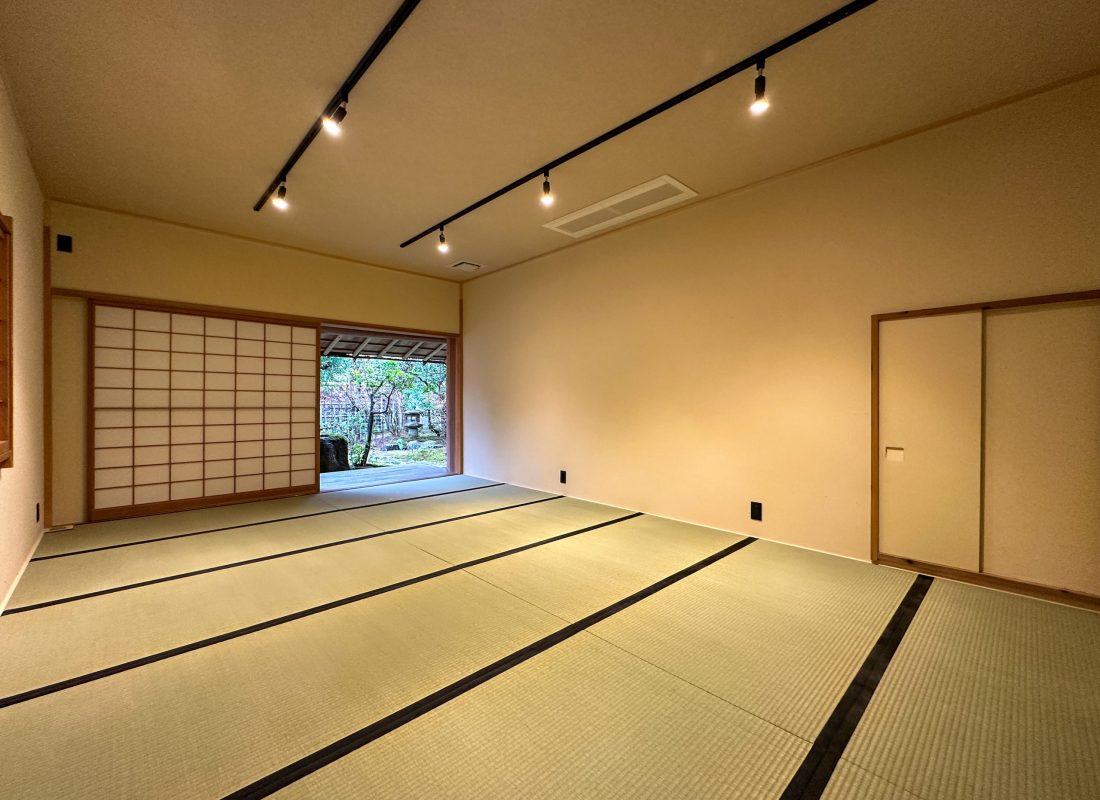
The conservation treats the teahouse less as a finished monument than as a living fabric. Earthen walls were re-rendered with matching soils, bark-clad posts and exposed woodwork were stabilised and protected, and the bamboo fences, water spout, and basin surrounds were renewed, since bamboo weathers quickly and is remade rather than mended. The moss garden and roji are held by continual tending. Services and lighting for contemporary use were introduced as discreetly as possible, so that the seams between old and new remain almost invisible.
The aim was never to stop time, but to keep the teahouse breathing — to pass it on as a living place of gathering, not as an object to be viewed.
这是一座位于京都北部山间的茶室,连同环绕其周的露地(茶庭)一并加以保存与更新;茶室与庭园原本便构想为一个整体,使建筑与景观合而为一。其用意,是让它得以继续作为饮茶之所被使用,而非作为一件被保存的器物。此处所谓保存,并非将建筑凝固于时间之中,而是对一处活的环境持续地加以照料:修补已磨损者,重做无法修补者,仅添置当下使用真正所需之物。
工作自庭园始,因为在茶事之中,趋近的过程本身已是仪式的一部分。青苔、飞石、竹篱与石灯笼,引人由外露地步入内露地,止于蹲踞—一方低矮的石钵,由一根竹筧引来细流,客人在此俯身,净手漱口,而后入席。这段缓慢的路径,意在使身体沉静,将日常世界搁置于外。
室内的修复秉持数寄屋式的克制:空间低矮而亲切,土墙、保留树皮的原木柱、榻榻米与和纸障子。光线被节制地引入—透过障子、纸天窗、低处的小窗,以及一扇形如明月的圆窗—使阴翳成为建筑积极的组成部分,而非须被驱逐之物。地炉与茶釜,始终是茶室仪式的核心;而其后的水屋,则将备茶的劳作不动声色地隐于视线之外。
在保存的处理上,茶室被视为一种活的肌理,而非一座完成的纪念物。土墙以相配的泥土重新涂覆,保留树皮的木柱与外露的木作得到加固与保护,竹篱、竹筧及石钵周围则予以更新—竹易风化,与其修补,不如重做。苔庭与露地,依赖不断的照料方得维系。当代使用所需的设备与照明,尽可能不着痕迹地嵌入,使新旧之间的接缝几近不可见。
目的从不在于让时间停驻,而在于让茶室继续呼吸—使它作为人们相聚的活的场所传承下去,而非一件供人观看之物。
京都の北の山あいに建つ茶室と、それを取り巻く露地庭を保存・更新するプロジェクトである。建物と庭は元来ひとつの構想として一体に設えられており、本計画はこれを保存された「もの」としてではなく、茶のための場として使い続けられるように手を入れる試みである。ここでの保存(コンサベーション)とは、建物を時のなかに固定することではなく、生きた環境を手入れし続けることとして捉えている。摩耗したものを繕い、繕えないものは作り替え、いまの使用がほんとうに必要とするものだけを加える。
仕事は庭から始まる。茶においては、アプローチがすでに茶事の一部だからである。苔・飛石・竹垣・石灯籠が外露地から内露地へと導き、一筋の竹の筧から水を受ける蹲踞へと至る。客はここで身をかがめ、席に入る前に手と口を清める。ゆるやかな道行きは、身体を静め、日常を後にするために設えられている。
室内は数寄屋の抑制にならって修復した。低く親密な室に、土壁、皮付きの自然木の柱、畳、障子。光はふんだんに採り入れず、障子・明かり取りの天窓・低い位置の小窓、そして月を思わせる丸い窓から控えめに導かれ、陰翳が建築の積極的な一部となる。炉と釜は茶室の儀礼の中心にあり続け、その奥で水屋が、準備という働きの場をさりげなく視界から隠している。
保存にあたっては、茶室を完成したモニュメントとしてではなく、生きた構築物として扱った。土壁は土を合わせて塗り直し、皮付きの柱や現しの木部は補強・保護し、風雨に弱く繕うより作り替えるほかない竹垣・筧・水鉢まわりは更新した。苔庭と露地は、絶え間ない手入れによって保たれる。現代の使用に要する設備や照明は、できるかぎり目立たぬよう挿入し、新旧の継ぎ目がほとんど見えないようにした。
目指したのは、時を止めることではなく、茶室を呼吸させ続けること―鑑賞される対象としてではなく、人の集う生きた場として継いでゆくことである。



© Archisan Co., Ltd. Tokyo, Japan. All rights reserved.