

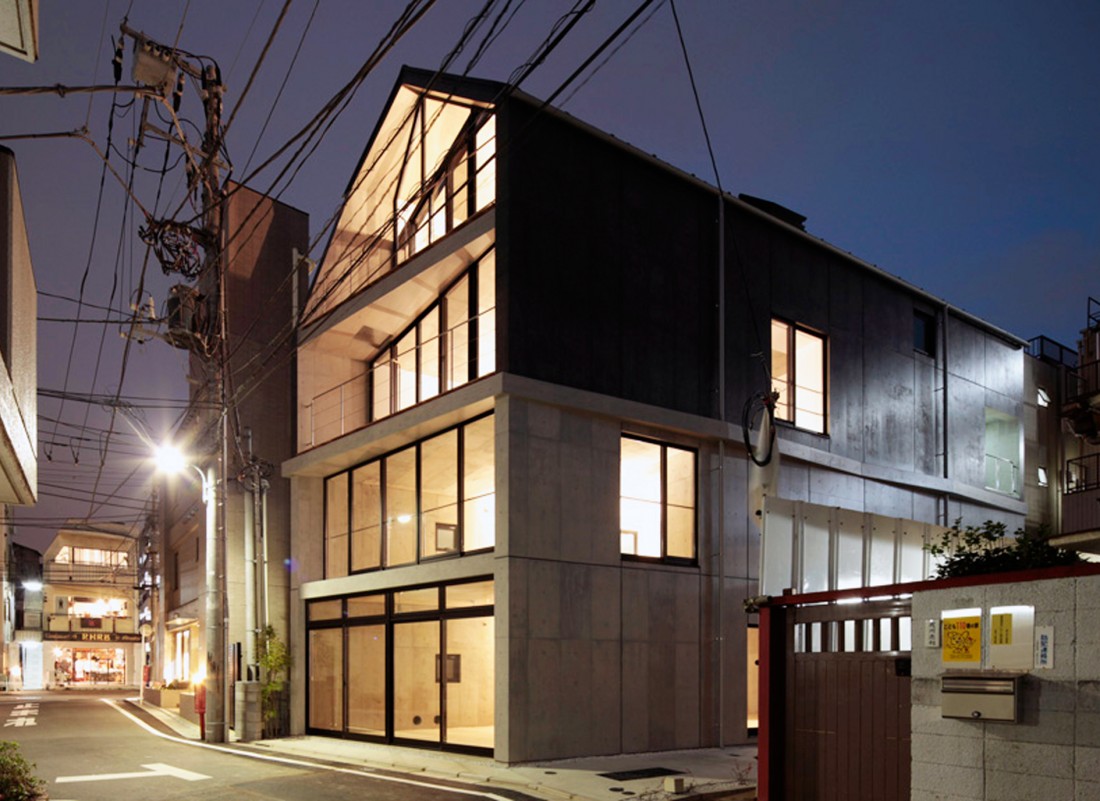
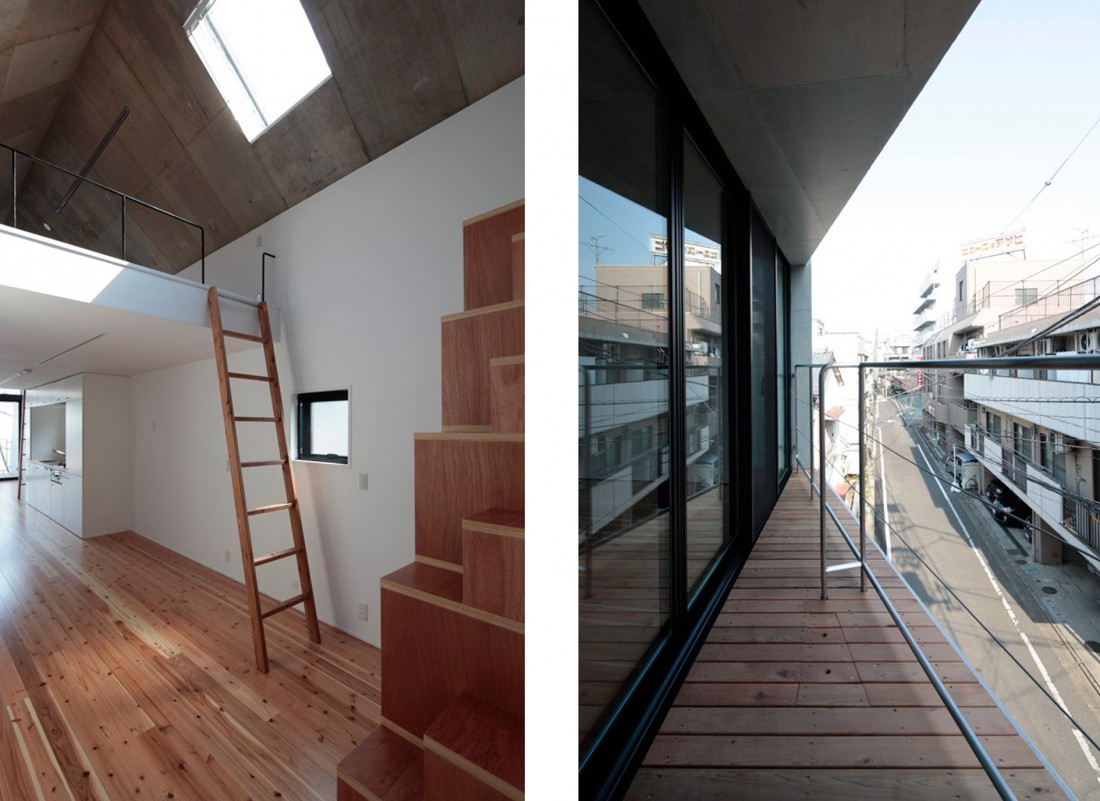
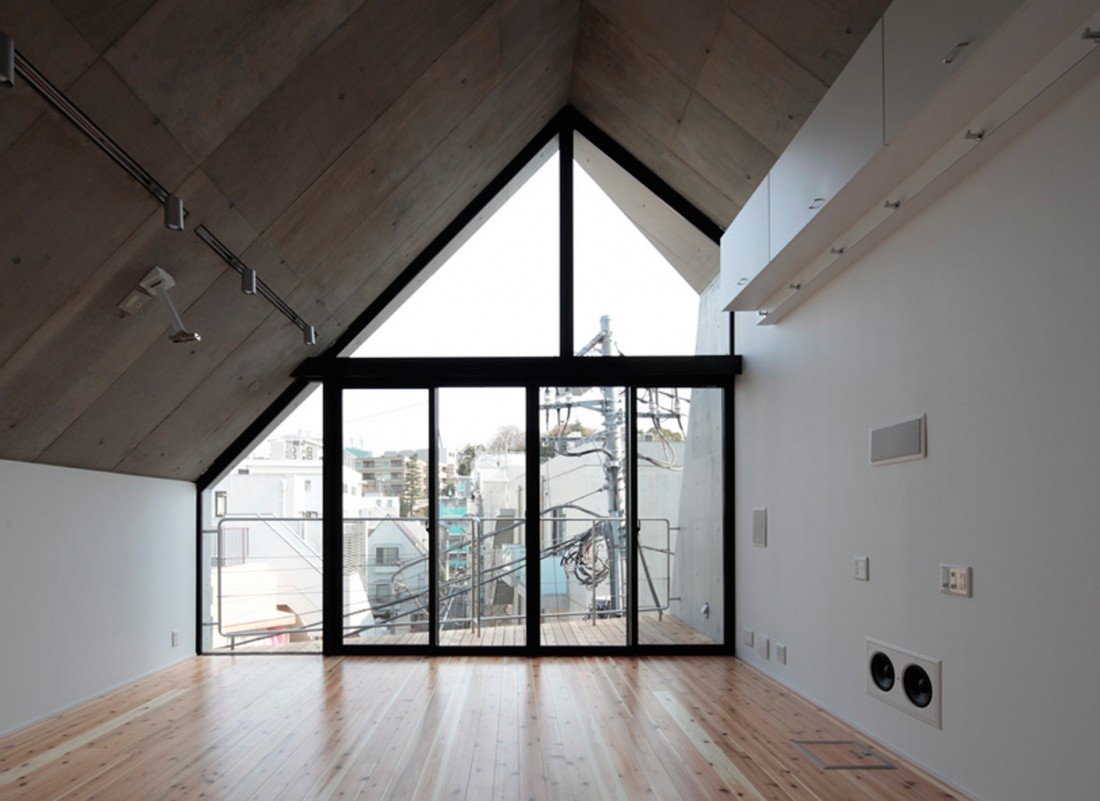
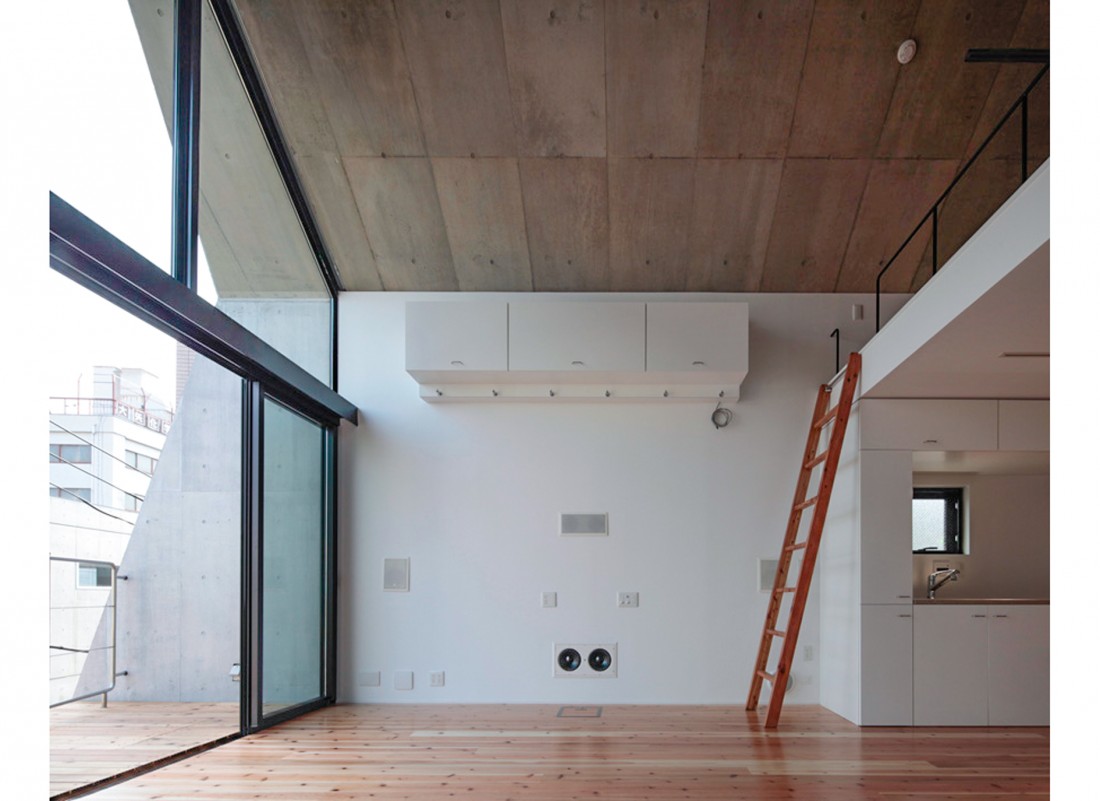
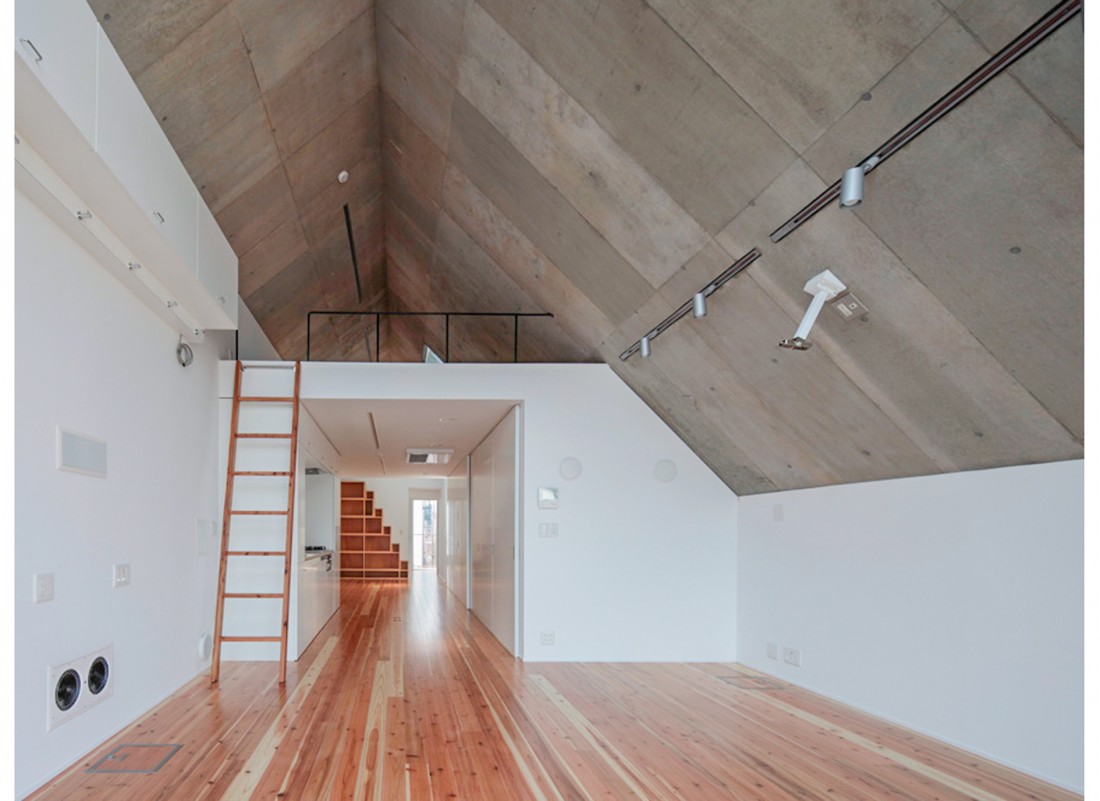
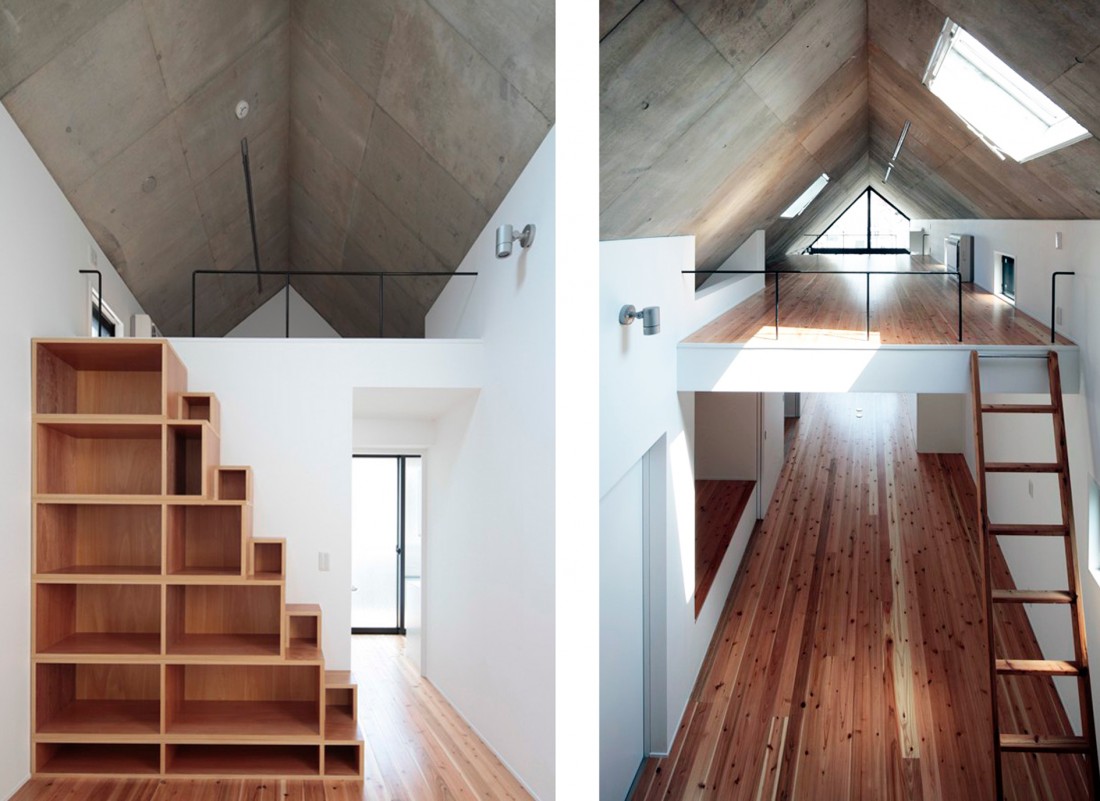
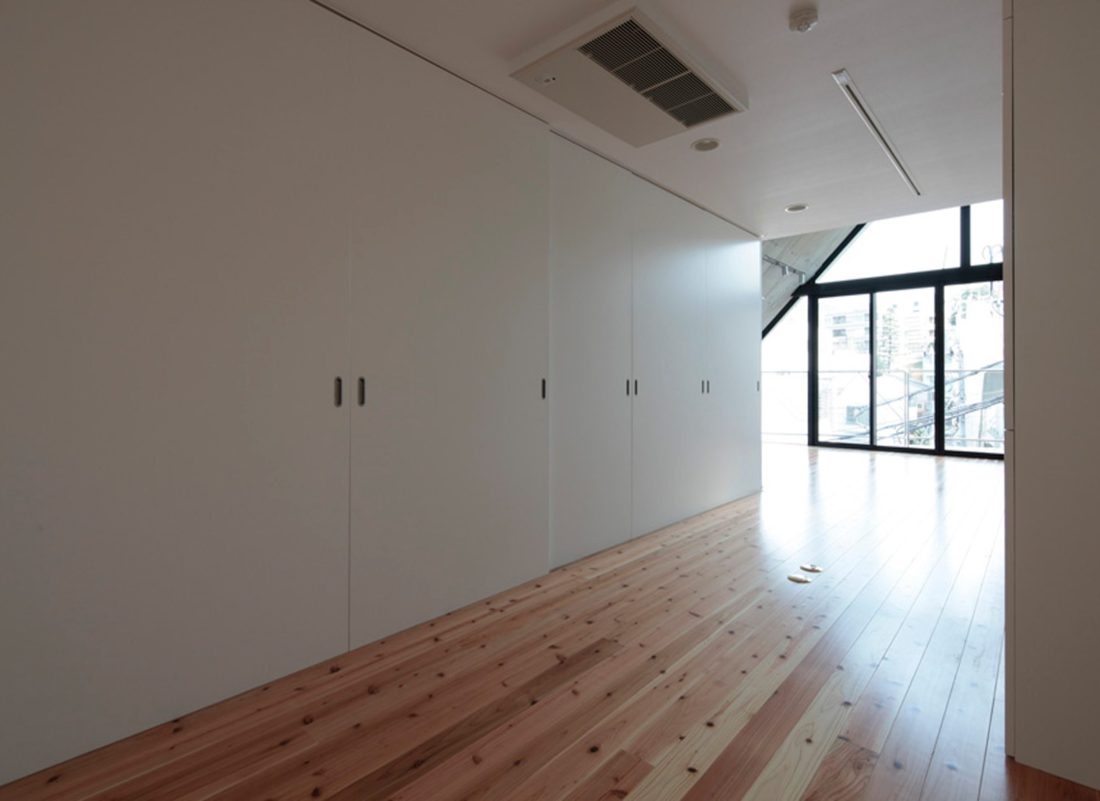
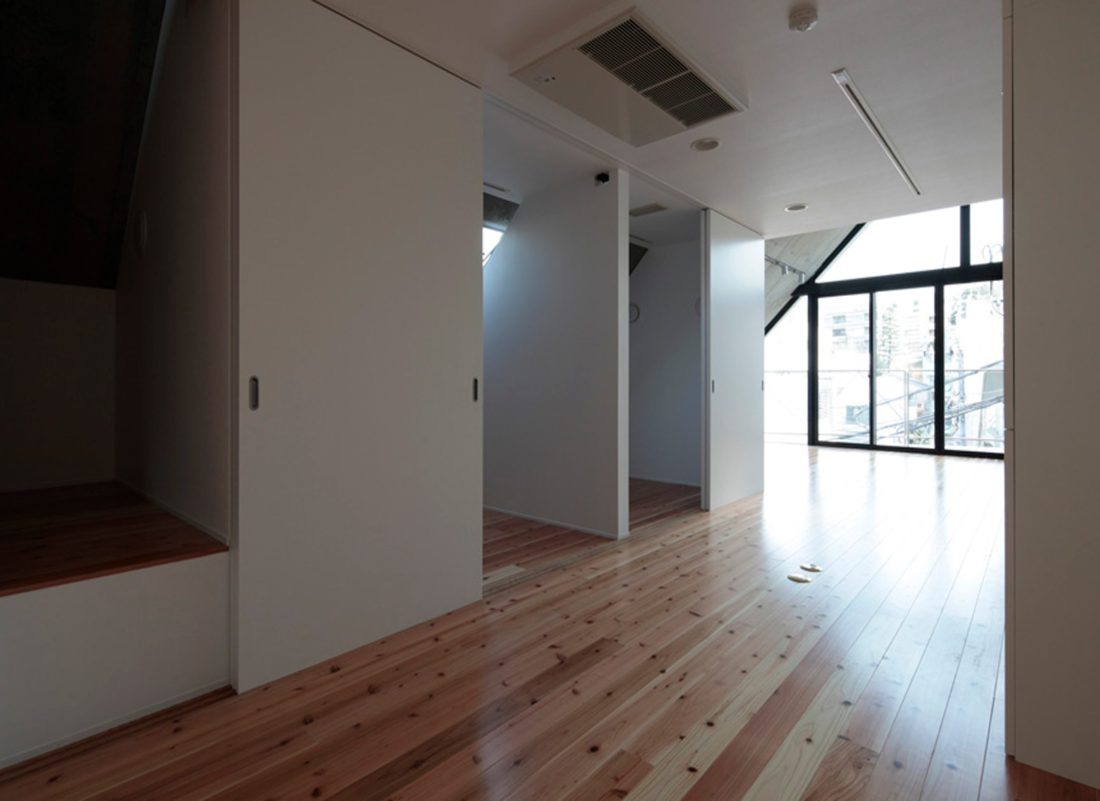
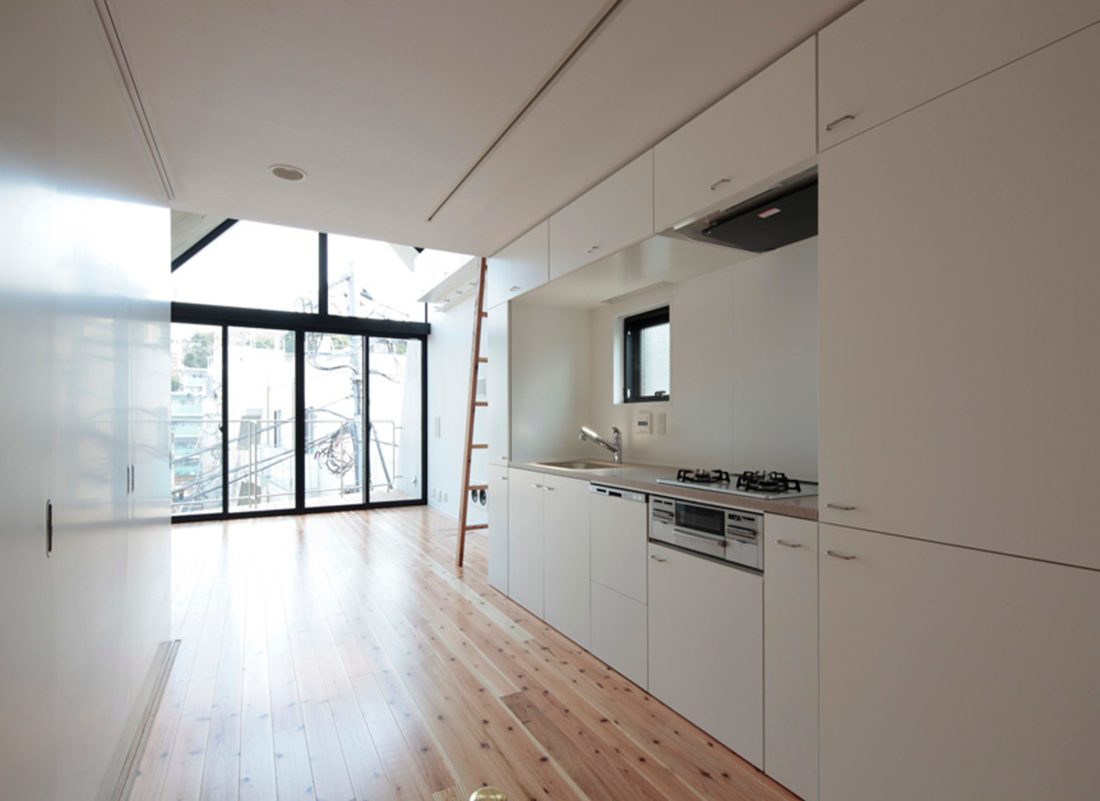
This mixed-use building in Nakameguro, Tokyo, combines a fashion boutique, an office, and the owner’s family residence. The lower floors accommodate commercial and office spaces, while the upper floors are used as the family home.
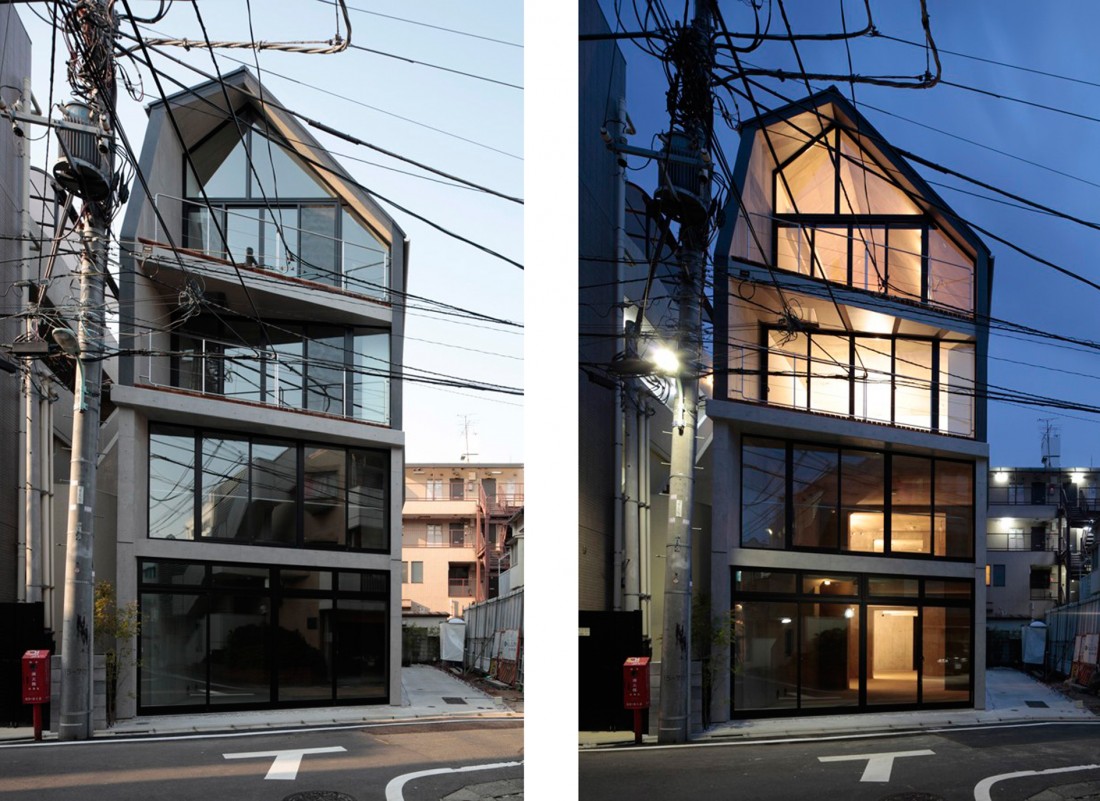
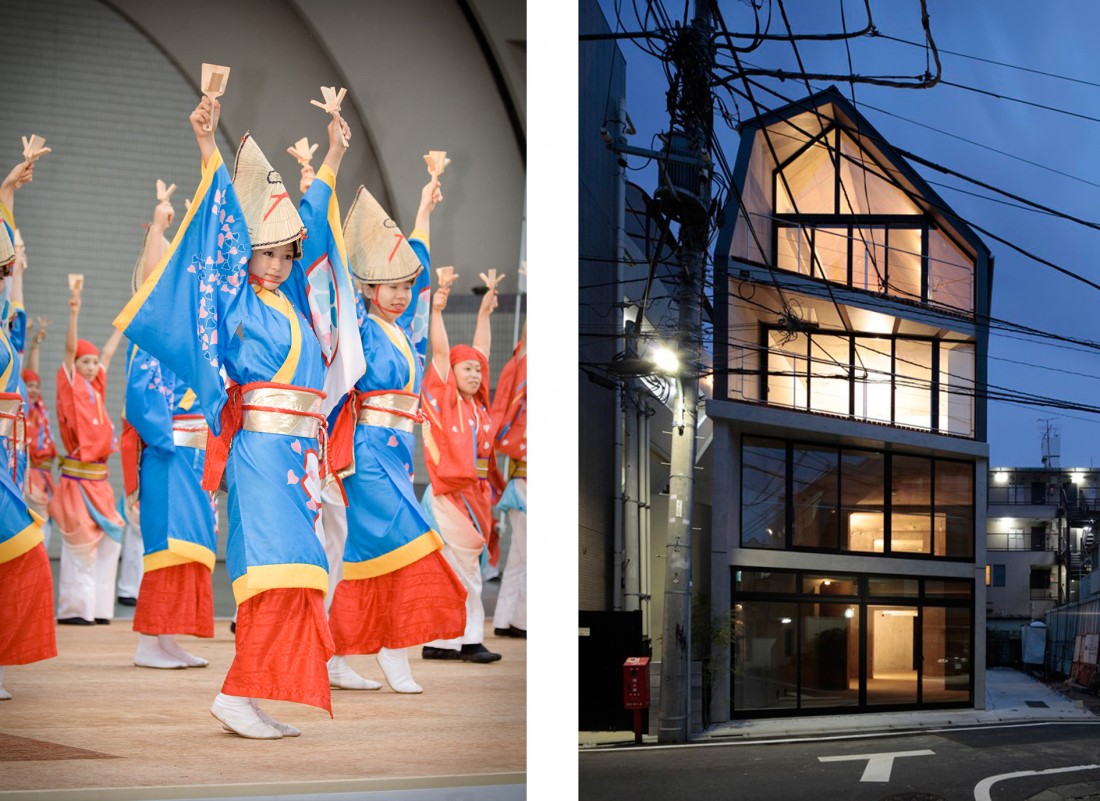
A projecting slab at the third floor, which we call the “OBI” after the sash of a kimono, marks the transition between the changing commercial activities below and the more private family life above.
The building’s form is shaped by local zoning and setback regulations. Rather than treating these requirements simply as constraints, the design transforms the gradual setbacks into a distinctive architectural profile. Balconies and large windows are integrated into the stepped front façade, creating a continuous and balanced composition from bottom to top.
这座位于东京中目黑的综合用途建筑,由时装店、办公室和业主住宅组成。低层主要用于商业和办公,上层则作为业主一家的居住空间。
三层位置设置了一道略微向外挑出的水平楼板,我们将其称为“OBI”,取意于和服腰带。它标志着下部不断变化的商业活动与上部较为私密的家庭生活之间的转换。
建筑的整体形态受到当地城市规划和退让规定的影响。设计并没有把这些法规要求仅仅视为限制,而是将逐层退让转化为建筑自身的轮廓特征。阳台和大面积开窗被整合到逐渐后退的临街立面中,使建筑从下至上形成连续而均衡的整体构成。
東京・中目黒に建つ、ファッションブティック、オフィス、オーナー家族の住宅からなる複合用途建築。低層部には商業・オフィス機能を配置し、上層部を家族の住居としている。
3階には、着物の帯にちなんで「OBI」と名付けた、わずかに張り出した水平スラブを設けています。このラインが、変化の多い下部の商業空間と、より私的な上部の家族の生活空間との境界を示す。
建物の形態は、地域の都市計画や斜線・セットバック規制によって形づくられている。こうした規制を単なる制約として扱うのではなく、段階的な後退を建築の輪郭そのものへと転換した。バルコニーや大きな開口部を段状に後退する正面ファサードに組み込み、建物全体に下から上へと連続する、均整のとれた姿を与える。
Collaboration with ISSHO, Shuji Tada(Structure) Photo: Kouichi Torimura